Fitness & Body Recomposition
Strength Training Through Menopause
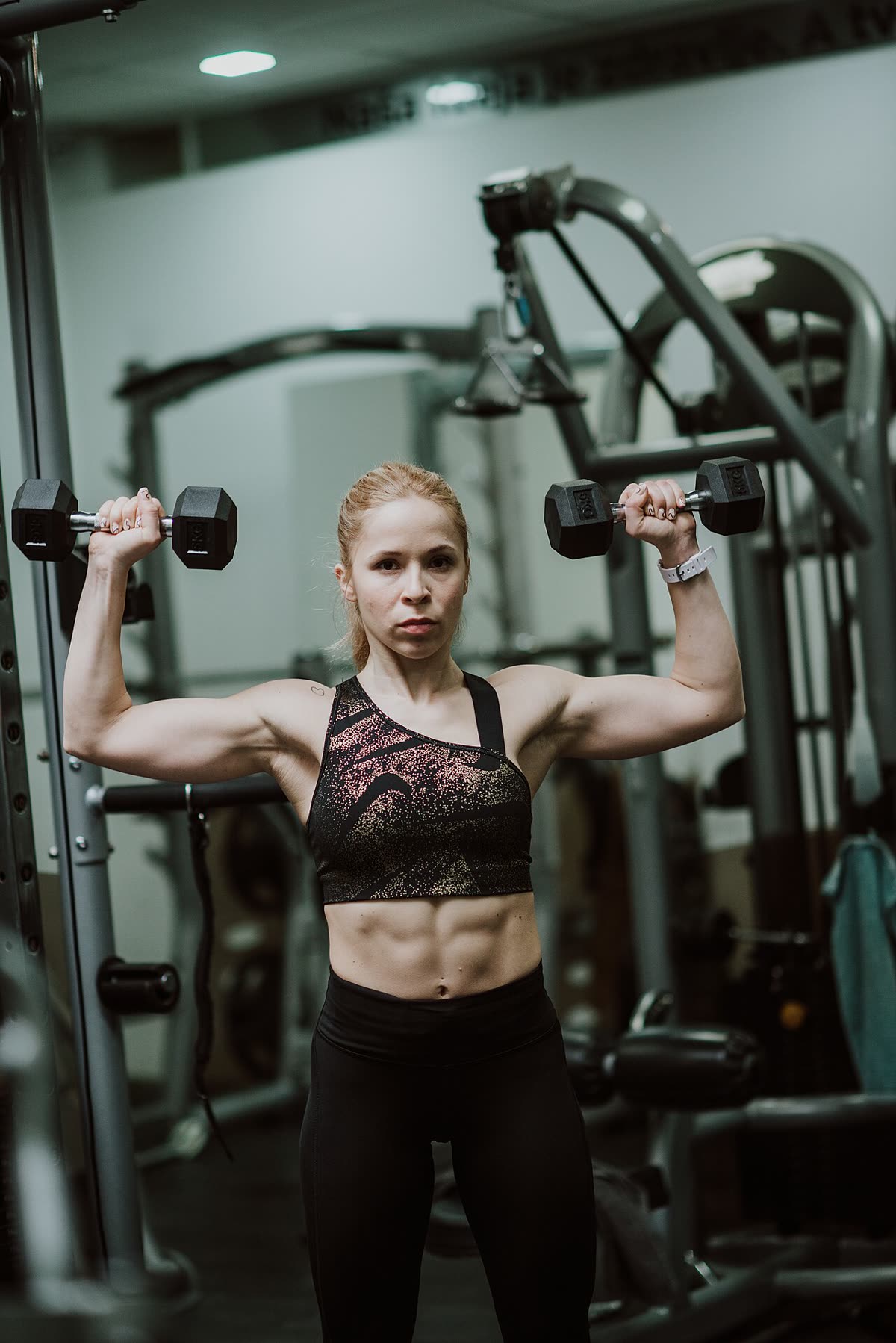
Image: Shoulder press with dumbbells by Shixart1985, CC BY 2.0, via Wikimedia Commons.
Here is the thing most menopause fitness advice gets backwards: this is the point to lift heavier, not to switch to lighter weights and gentle classes. Falling estrogen speeds up the loss of both muscle and bone, and the single most effective counter to both is progressive resistance training with real load. This guide is about doing that safely, eating to support it, and adjusting as you move from perimenopause to the years after.
Who this is for
Women roughly 45 to 60 who are in perimenopause or past it, want to hold on to strength, protect their bones, and manage the changes in energy, sleep, and body composition that come with the transition. You do not need to be an athlete. If you can train two or three times a week, the approach below is built around your physiology, not a 25-year-old's.
Why estrogen changes everything
Estrogen does more than regulate cycles. It helps maintain muscle, supports bone density, and influences how you store fat and recover from training. As it declines through perimenopause and drops sharply after your last period, several things shift at once:
- Muscle is lost faster unless you actively train to keep it.
- Bone density falls, most steeply in the first few years after menopause, raising fracture risk later.
- Fat tends to redistribute toward the middle, even without eating more.
- Sleep and temperature regulation get less reliable, which affects recovery.
None of this means decline is inevitable. It means the training that protects you has to be deliberate, and it has to include load.
Lift heavier, not lighter - the part few programs explain
The instinct many women are sold is to go easy: light weights, high reps, plenty of yoga. Mobility and gentle movement have their place, but they do not build the muscle or the bone you are trying to protect. Bone responds to being loaded, and muscle responds to being challenged. What actually works:
- Train with weights that are genuinely hard for the last couple of reps. Sets of 5 to 8 reps on the big movements (squat, hinge, press, row) drive strength and bone stimulus better than endless light reps.
- Include impact where your joints allow it. Step-ups, low hops, or brisk stair climbing load bone in a way that swimming and cycling, for all their other benefits, do not.
- Progress over months. Add small amounts of weight when a set feels solid, and expect strength to keep climbing well into your 50s and 60s. It does.
If lifting heavy is new to you, our women's strength guide covers how to start, and building bone strength goes deeper on the loading that protects your skeleton.
A realistic week
Two or three full-body strength sessions cover most of what matters. Everything else is support.
| Type | What it does | How often |
|---|---|---|
| Full-body strength | Protects muscle and bone, the priority | 2 to 3x/week |
| Easy cardio (walk, cycle) | Heart health, recovery, mood | 2 to 4x/week |
| Impact / balance work | Bone loading and fall prevention | Woven into strength days |
| Mobility or yoga | Flexibility and stress, not a strength substitute | As you like |
Leave at least a day between hard strength sessions. Recovery is more of a limit now than it was, and pushing through it is how progress stalls.
Eat to hold on to muscle
Protein needs go up, not down, as you age and estrogen falls. Under-eating protein is one of the most common reasons women lose strength through this window.
- Protein: aim for roughly 1.2 to 1.6 grams per kilogram of body weight - noticeably more than the old 0.8 baseline. Spread it across meals.
- Calcium and vitamin D: both support bone alongside your training. Calcium from food where you can, and vitamin D is worth checking with your doctor, as many women run low.
- Enough total food: chronic under-eating to fight midsection changes backfires - it costs you muscle and slows recovery. Eat to train well.
For how eating shifts more broadly with age, see our nutrition after 40 guide, and managing weight through hormonal change for why the scale gets stubborn.
Working with symptoms, not around them
Perimenopause and menopause bring symptoms that can genuinely disrupt training. You can plan around most of them:
- Hot flashes: train somewhere cool, wear moisture-wicking layers, and keep water close. Exercise eases symptoms for many women, even if it does not remove them.
- Poor sleep: keep hard sessions out of the last few hours before bed, and treat a bad night as a signal to lower intensity rather than skip entirely.
- Joint aches: a longer warm-up (10 minutes, the first movement at half weight) does more than any supplement. Low-impact options exist for the days your knees or hips complain.
- Flat energy: train when your energy is highest, often mornings, and accept that some weeks you maintain rather than gain. Maintaining is a win here.
Perimenopause vs after - what changes
The transition is not one state. Broadly:
- Perimenopause (often the 40s, cycles still happening but irregular): symptoms fluctuate week to week. Expect your energy and strength to swing, and let the plan flex with it rather than forcing every session.
- Postmenopause (12 months past your last period): symptoms often settle, but bone loss has been fastest in these early years, so the case for consistent heavy loading and impact is strongest now.
Through both, the direction is the same: keep loading muscle and bone. What changes is how much you flex around symptoms.
The mistakes that stall women here
- Switching to light weights and cardio out of caution - the exact opposite of what protects muscle and bone.
- Under-eating protein while trying to lose the midsection, which costs the muscle you are training for.
- Treating a bad symptom week as a reason to quit rather than to dial back and continue.
- Skipping the warm-up, then blaming age when a joint complains.
When to check with a professional
See a doctor if you have unusual or persistent joint pain, fatigue that rest does not fix, or symptoms severe enough to derail daily life - hormone therapy and other options are worth discussing. For clinicians who specialize in this stage, the Menopause Society maintains a directory of certified practitioners.
FAQs
- Should I really lift heavy through menopause?
Yes, assuming no medical contraindication. Heavier resistance training is one of the most effective ways to counter the muscle and bone loss that accelerate as estrogen falls. Start where you are, progress gradually, and prioritize good form over maximal weight. - How much protein do I need during menopause?
Roughly 1.2 to 1.6 grams per kilogram of body weight per day, higher than the 0.8 gram general baseline, spread across meals. Adequate protein is central to holding on to muscle through the transition. - What is the best exercise for bone density after menopause?
Resistance training combined with weight-bearing impact - squats, lunges, step-ups, and controlled hops where your joints allow. Bone strengthens in response to being loaded, so non-impact activities like swimming, while healthy, do less for bone. - Can exercise help with hot flashes and mood?
Regular exercise improves mood and helps many women manage symptoms, though results vary from person to person. Training in a cool environment and staying hydrated makes sessions more comfortable during flashes. - When is the best time of day to train during menopause?
Whenever your energy is most reliable, which is often morning. Keep intense sessions out of the last few hours before bed, since sleep is frequently already disrupted during this stage. - How do I handle training on low-energy or bad-sleep days?
Lower the intensity rather than skipping. A shorter, lighter session maintains the habit and still supports recovery. Some weeks you maintain rather than progress, and that is a success during menopause. - What is the difference between training in perimenopause and after?
In perimenopause, symptoms and energy fluctuate, so flexibility matters more. After menopause, symptoms often settle but early bone loss is fastest, making consistent heavy loading and impact especially valuable. - Do I need supplements?
Food first. Calcium from your diet and adequate vitamin D support bone alongside training, and many women are low in vitamin D, so it is worth checking with your doctor. Do not start supplements on autopilot without that conversation. - Why am I gaining weight around the middle despite training?
Falling estrogen shifts fat storage toward the abdomen even without eating more. Keep training with load, eat enough protein, and focus on strength and how clothes fit rather than the scale alone. - How often should I change my program?
Review every 4 to 6 weeks, adjusting for energy, symptoms, and progress. Keep the core principle constant - load your muscles and bones - and flex the volume and intensity around how you feel.